5210+ Every Day
Parents and caregivers are imperative in teaching and demonstrating healthy choices for children and adolescents. One example of teaching parents/caregivers about healthy lifestyles is through the 5-2-1-0+ Every Day approach. The 5-2-1-0+ Every Day approach is a public health initiative aimed at promoting healthy lifestyles among children and families. This simple, easy-to-remember formula encourages balanced nutrition, regular exercise, and overall wellness, helping to prevent childhood obesity and related health issues. By following the 5-2-1-0+ Every Day guidelines, children and families can develop healthy habits that contribute to their long-term physical and emotional well-being.
Community partners can also attend a training to implement within their own organization. The program includes 4 lessons that can be taught either individually or in a classroom environment. The training provides an overview of the lessons and the materials so you can bring this helpful content to your organization.


5210+ Every Day
Encourage balanced nutrition, regular exercise, and overall wellness, to help prevent childhood obesity and related health issues with this easy-to-remember formula.
5 or more servings of fruits and vegetables
Eating more fruits and vegetables provides important nutrients your body and mind need.
Keep it simple:
- Buy fruits and vegetables that are in season.
- Let your child pick out a new fruit or vegetable to try when grocery shopping.
2 hours or less of recreational screen time
Reduced time on screens gives you more time for friends, family and sleep.
Ways to unplug from screens:
- Plan family outings, game or movie nights.
- Get more exercise, either outside or inside.
- Read, journal or try arts and crafts.
- Call friends and family to reconnect
1 hour or more of physical activity
Exercise helps your body stay flexible and strong.
Ideas to get moving:
- Take the stairs.
- Take a walk with your family.
- Park your car at the back of the parking lot.
- Play with your pet.
- Go on a bike ride.
0 sugary drinks, more water and low-fat milk
Reducing sugary drinks and drinking more water helps keep teeth healthy and your body hydrated. We need six to eight glasses of water a day!
Drink Water:
- When you wake up
- With every meal and snack
- When exercising
+ 10-12 hours of sleep every night
Quality sleep is important for the mind to focus and learn. Preschool and school-age children need an average of 10-12 hours of sleep every night.
- Practice a regular and relaxing bedtime routine
- End screen time an hour before bedtime
- Limit sugar or caffeine before bedtime
- Adjust bedroom light,m noise and temperature for comfort
5210+ Every Day (Español)
Fomente una alimentación equilibrada, el ejercicio regular y el bienestar general para ayudar a prevenir la obesidad infantil y los problemas de salud asociados, utilizando esta fórmula fácil de recordar.
5 o más porciones de frutas y verduras
Comer más frutas y verduras aporta nutrientes importantes que tu cuerpo y mente necesitan.
Hazlo simple:
- Compra frutas y verduras de temporada.
- Deja que tu hijo elija una fruta o verdura nueva para probar cuando haga la compra.
2 horas o menos de tiempo recreativo frente a una pantalla
Reducir el tiempo frente a las pantallas te da más tiempo para tus amigos, familia y para dormir.
Maneras de desconectarte de las pantallas:
- Planifica salidas familiares, noches de juegos o películas.
- Haz más ejercicio, ya sea al aire libre o en casa.
- Lee, escribe un diario o haz manualidades.
- Llama a tus amigos y familiares para reconectar.
1 hora o más de actividad física
El ejercicio ayuda a mantener el cuerpo flexible y fuerte.
Ideas para empezar a moverte:
- Usa las escaleras.
- Sal a caminar con tu familia.
- Estaciona el auto al fondo del estacionamiento.
- Juega con tu mascota.
- Sal a dar un paseo en bicicleta.
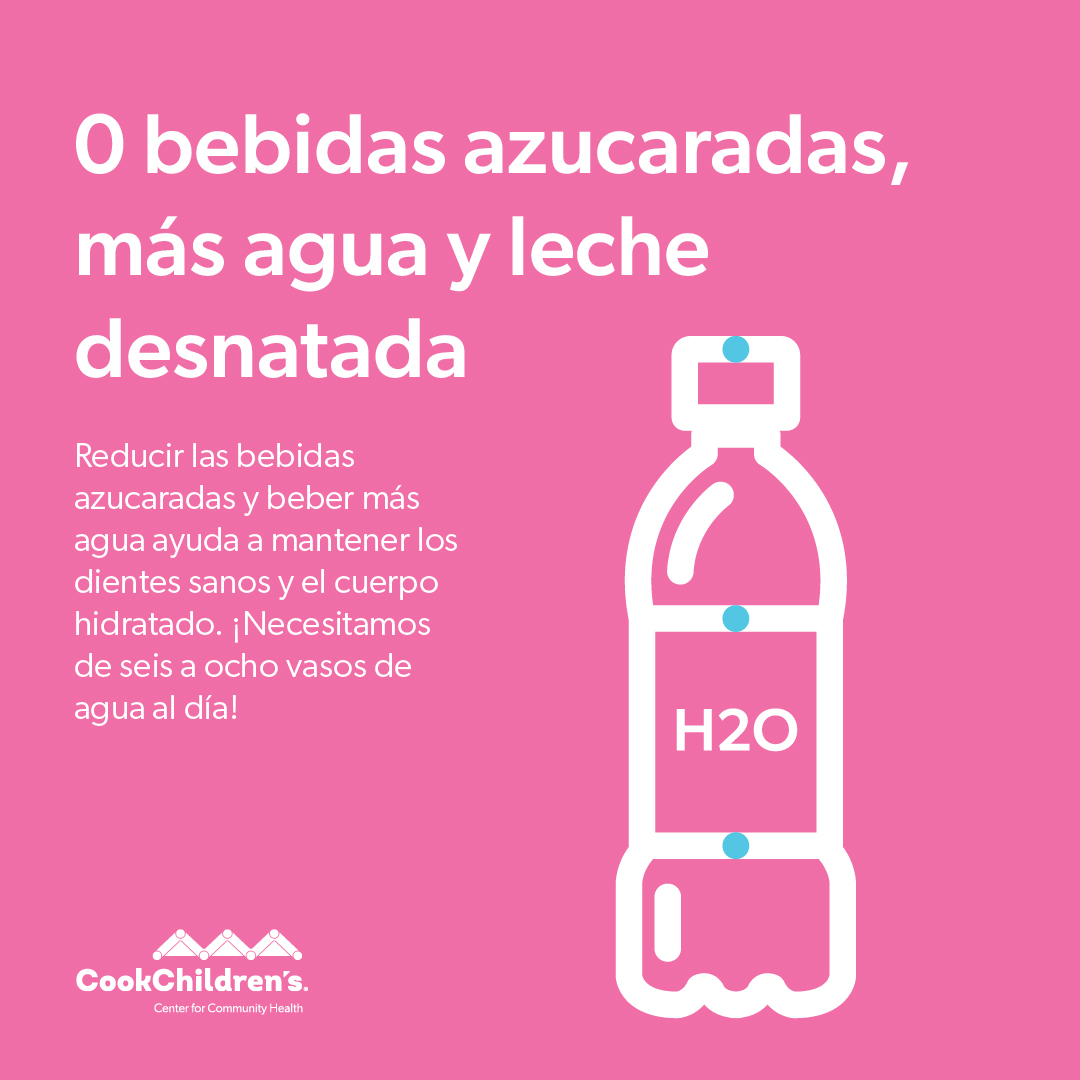
0 bebidas azucaradas, más agua y leche baja en grasa
Reducir el consumo de bebidas azucaradas y beber más agua ayuda a mantener los dientes sanos y el cuerpo hidratado. ¡Necesitamos de seis a ocho vasos de agua al día!
Bebe agua:
- Al despertar
- Con cada comida y refrigerio
- Al hacer ejercicio
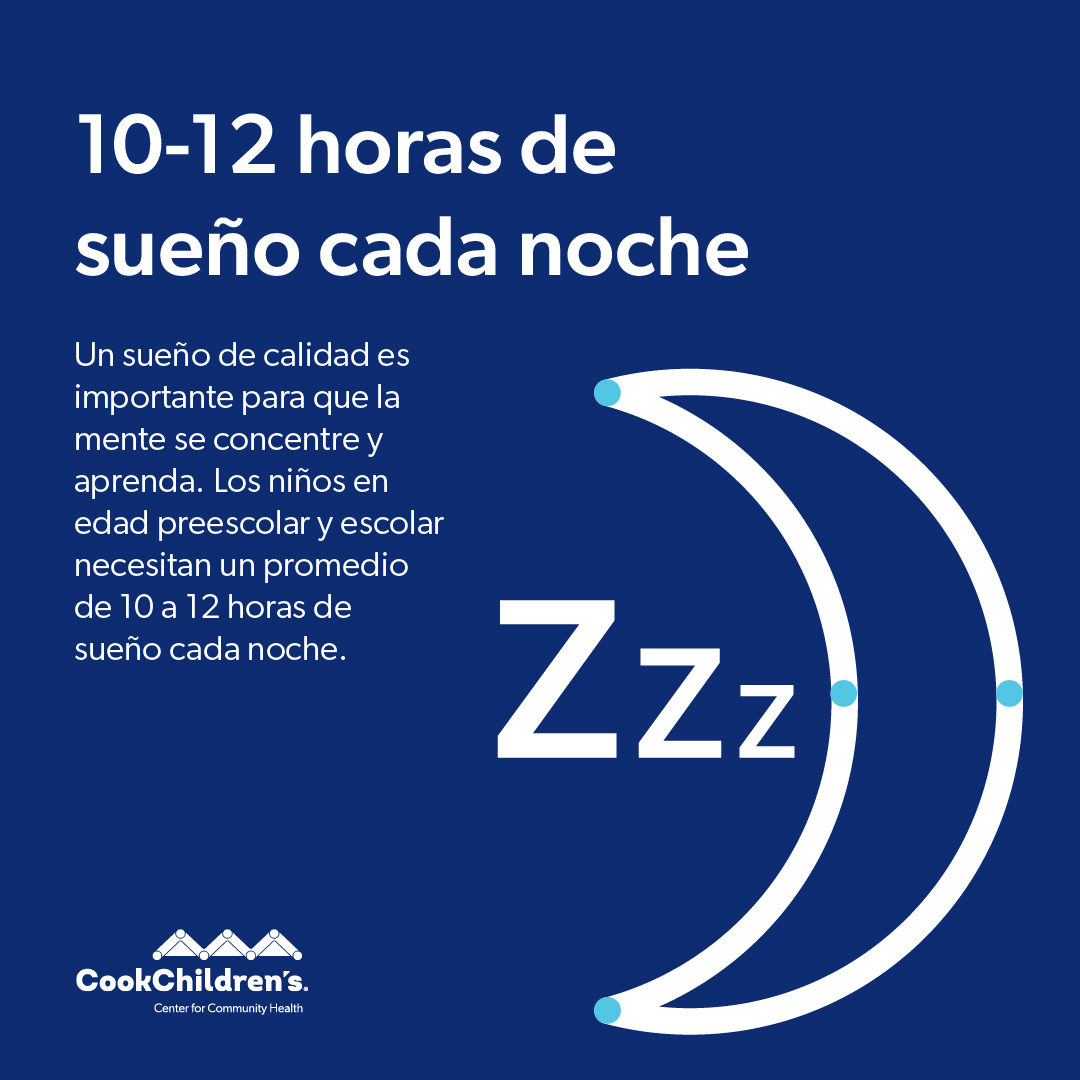
+ 10-12 horas de sueño cada noche
Un sueño de calidad es importante para que la mente se concentre y aprenda. Los niños en edad preescolar y escolar necesitan un promedio de 10 a 12 horas de sueño cada noche.
- Practique una rutina regular y relajante para la hora de dormir.
- Deje de usar pantallas una hora antes de acostarse.
- Limite el consumo de azúcar o cafeína antes de acostarse.
- Ajuste la luz, el ruido y la temperatura del dormitorio para mayor comodidad.
Go, Slow and Whoa
"Go, Slow, and Whoa" is a traffic-light-based nutrition guide developed by the U.S. National Heart, Lung, and Blood Institute (NHLBI) to help people easily categorize foods by their healthfulness and how often they should be eaten. Healthy habits make healthy bodies.
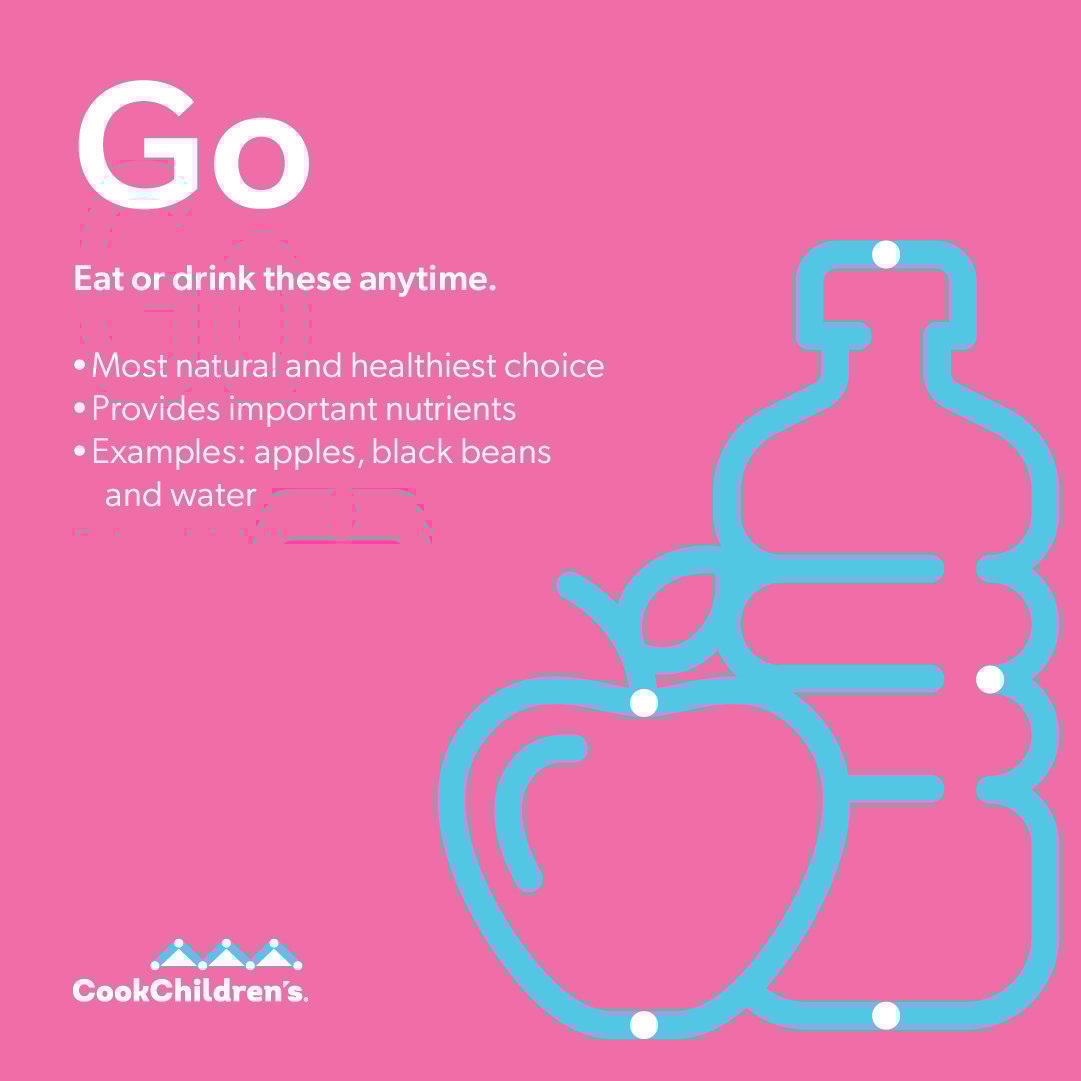
Anytime
GO foods – nutrient dense foods that usually contain the smallest amount of salt, added sugars, unhealthy kinds of fat and no preservatives. A few examples of GO foods that you can eat or drink anytime are: apples, black beans and water.
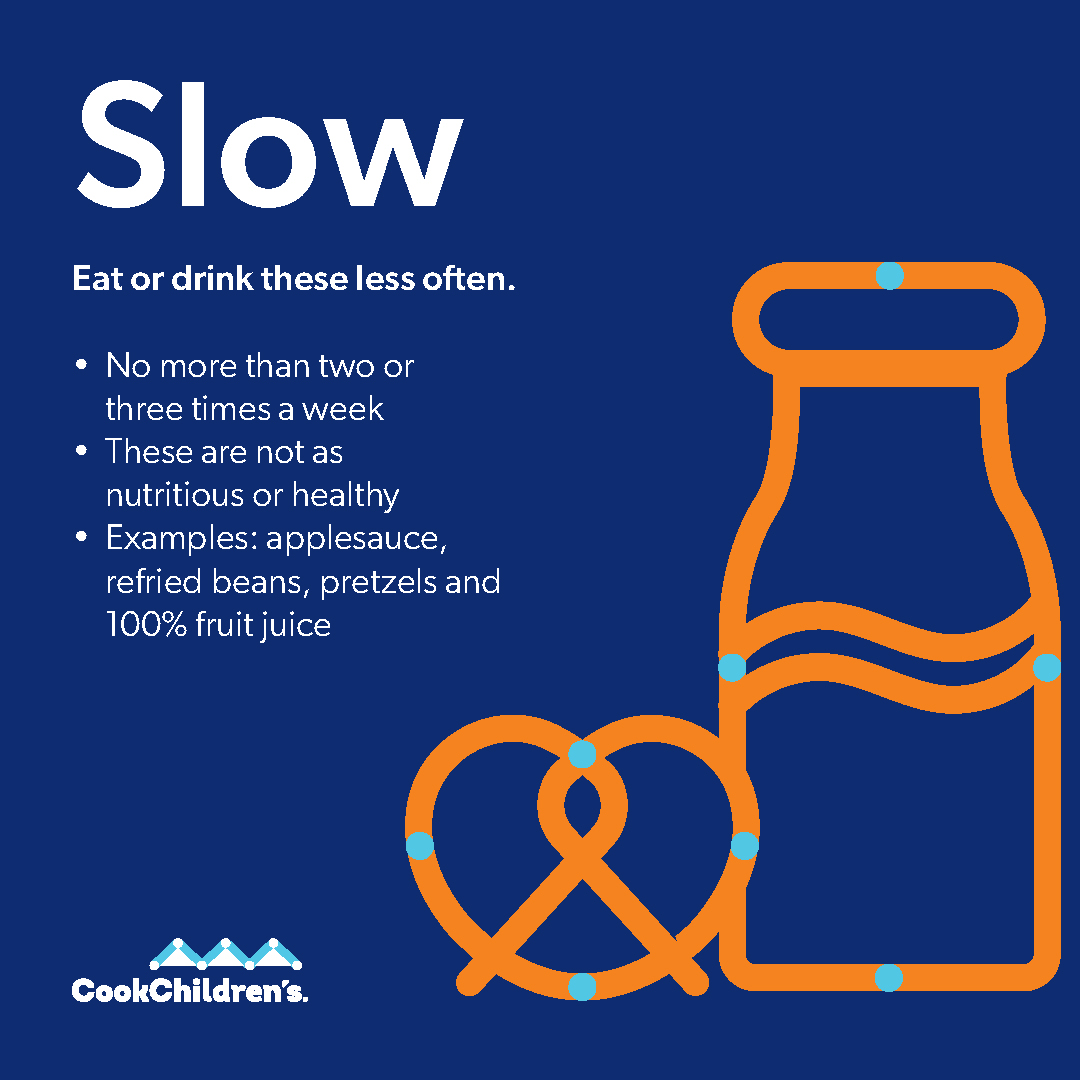
2 or 3 times a week
SLOW foods - foods that usually contain a little more sugar, salt, and unhealthy fats and preservatives that would not be found in a GO food. A serving size of a SLOW food can be eaten 2 or 3 times a week. A few examples of SLOW foods are: applesauce, refried beans, pretzels and 100% apple juice.
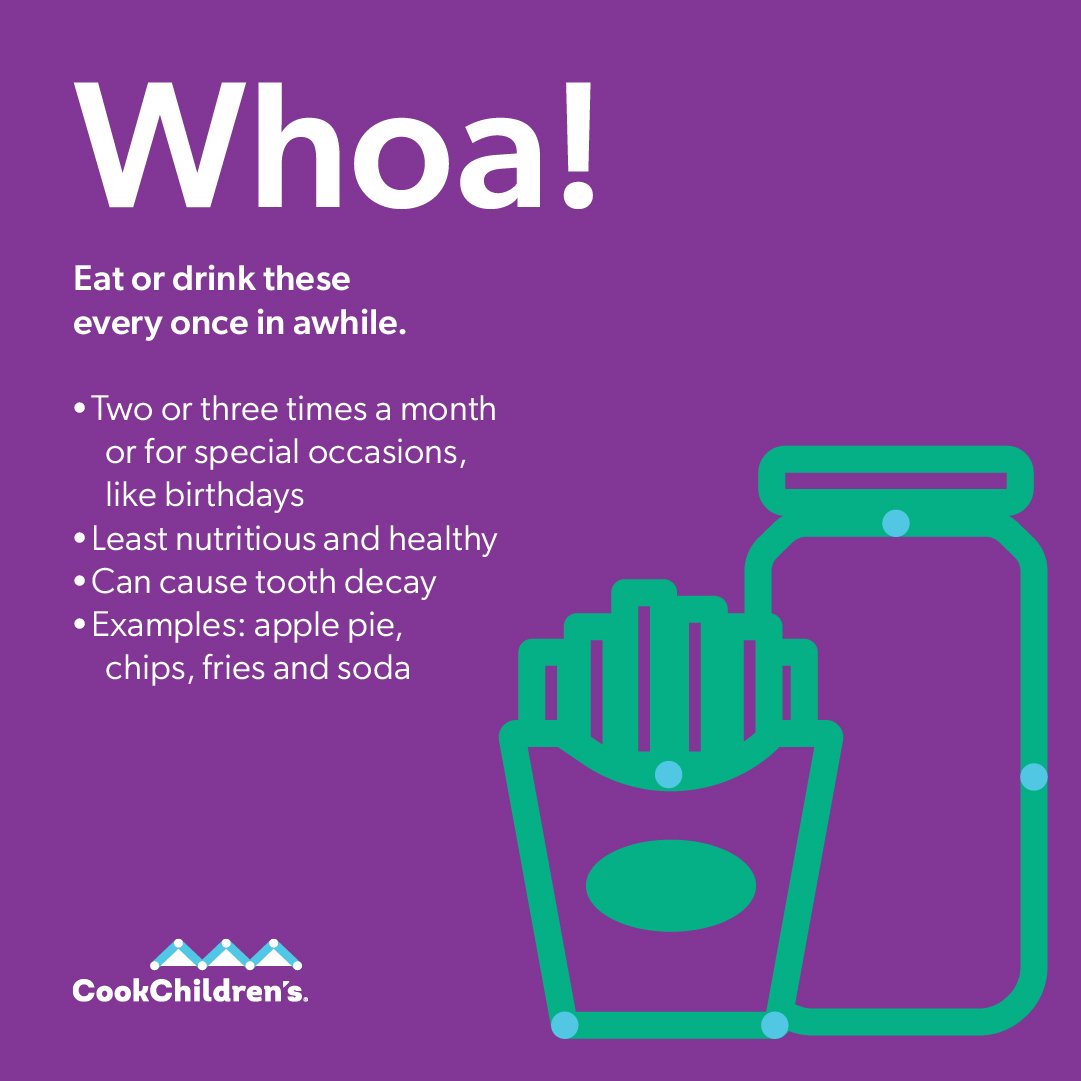
2 or 3 times a month
WHOA foods - foods that contain a lot of sugar, salts, unhealthy fats and preservatives than both the GO and SLOW foods. A serving size of a WHOA food can be eaten 2 or 3 times a month. A few examples of WHOA foods are: apple pie, chips, fries and soda.
Mucho, poco, muy poco (Español)
"Mucho, Poco, Muy poco" es una guía nutricional basada en el código de colores del semáforo, desarrollada por el Instituto Nacional del Corazón, los Pulmones y la Sangre de los EE. UU. (NHLBI) para ayudar a las personas a clasificar fácilmente los alimentos según su valor para la salud y la frecuencia con la que deben consumirse. Hábitos saludables hacen cuerpos saludables.
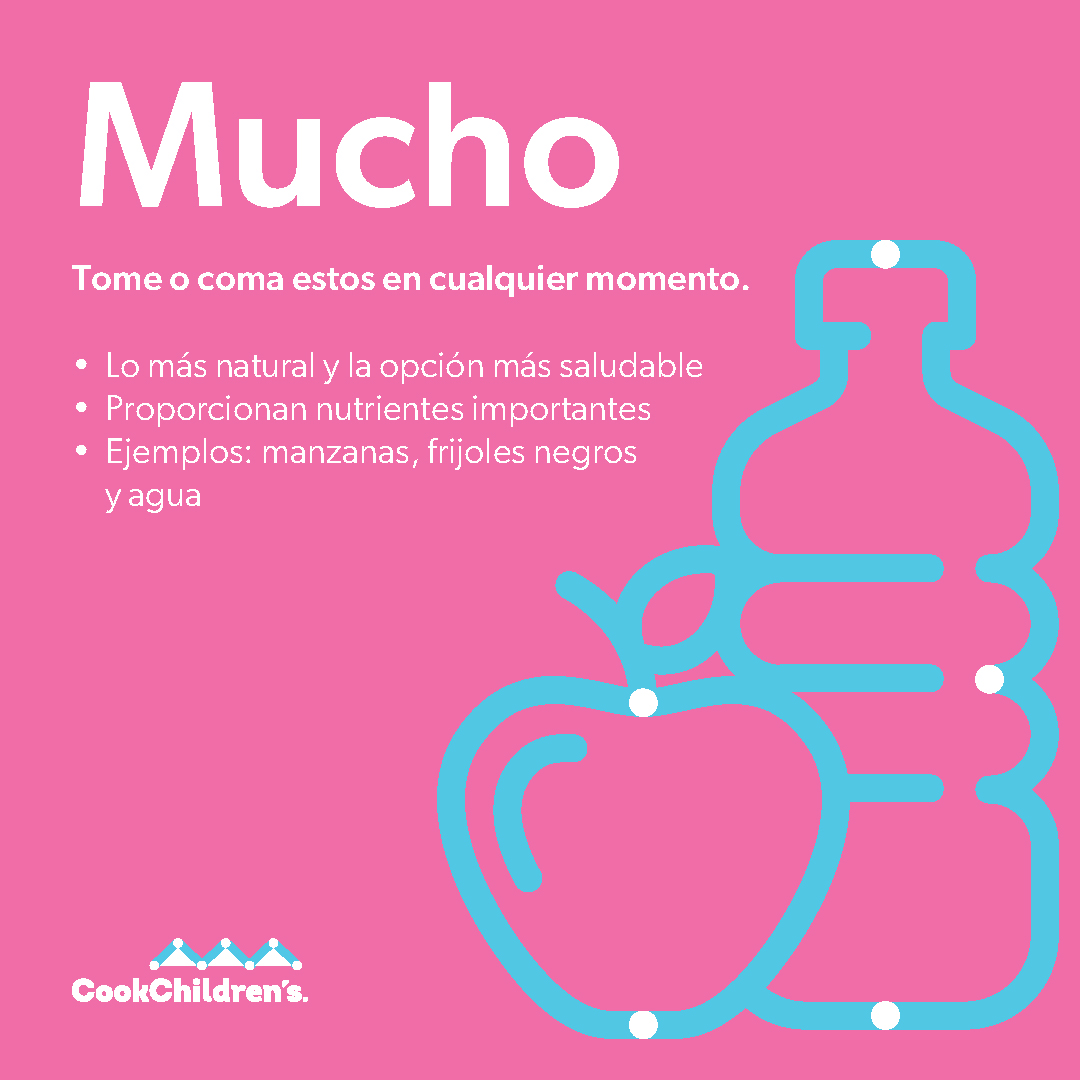
Alimentos diarios
Alimentos de alta calidad- alimentos ricos en nutrientes que suelen contener la menor cantidad de sal, azúcares añadidos, grasas no saludables y sin conservantes. Algunos ejemplos de alimentos de alta calidad que puedes comer o beber en cualquier momento son: manzanas, frijoles negros y agua.
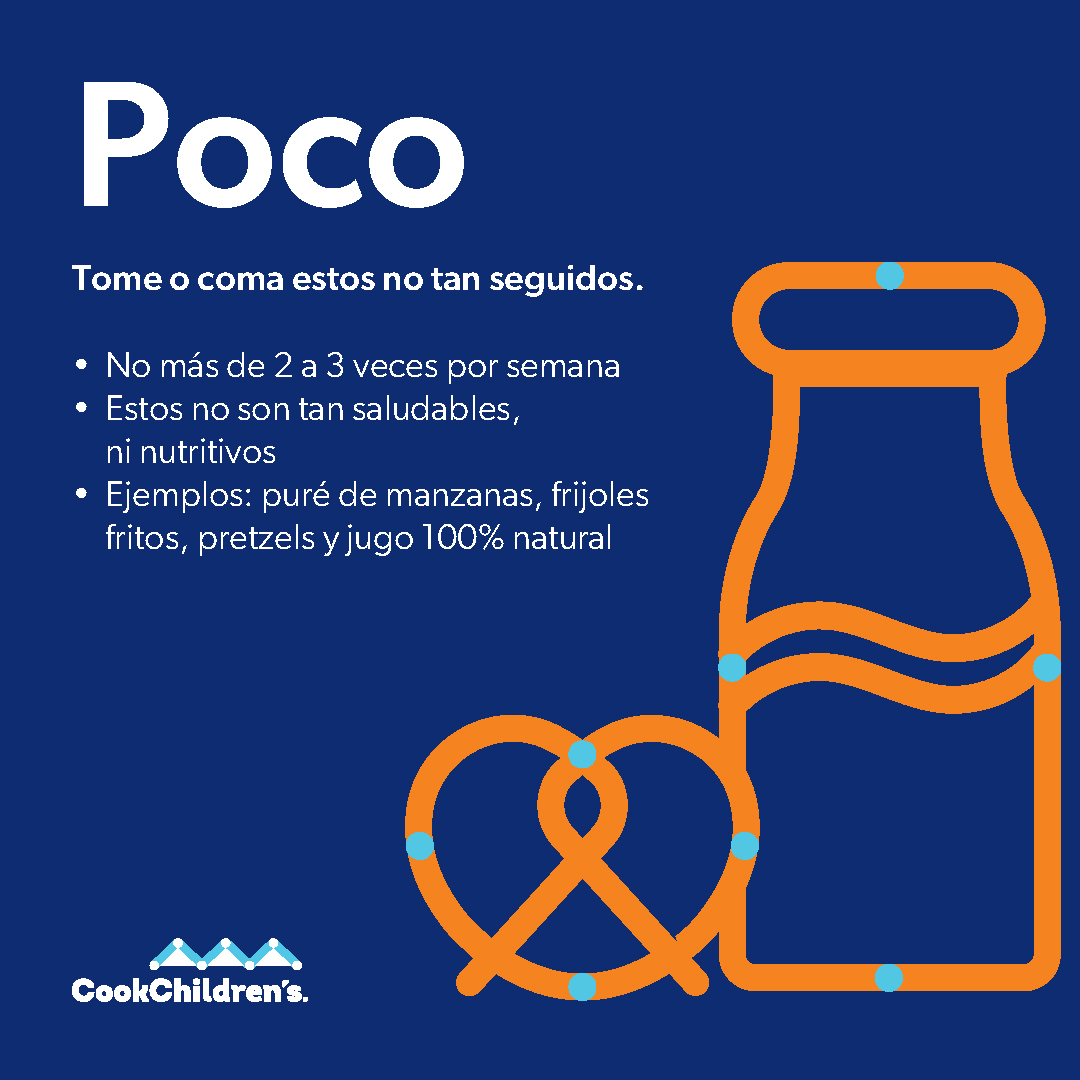
2 o 3 veces por semana
Poco alimentos - alimentos que suelen contener un poco más de azúcar, sal, grasas no saludables y conservantes que no se encuentran en una comida rápida. Una porción de comida lenta se puede consumir 2 o 3 veces por semana. Algunos ejemplos de comidas lentas son: puré de manzana, frijoles refritos, pretzels y jugo de manzana 100 % natural.
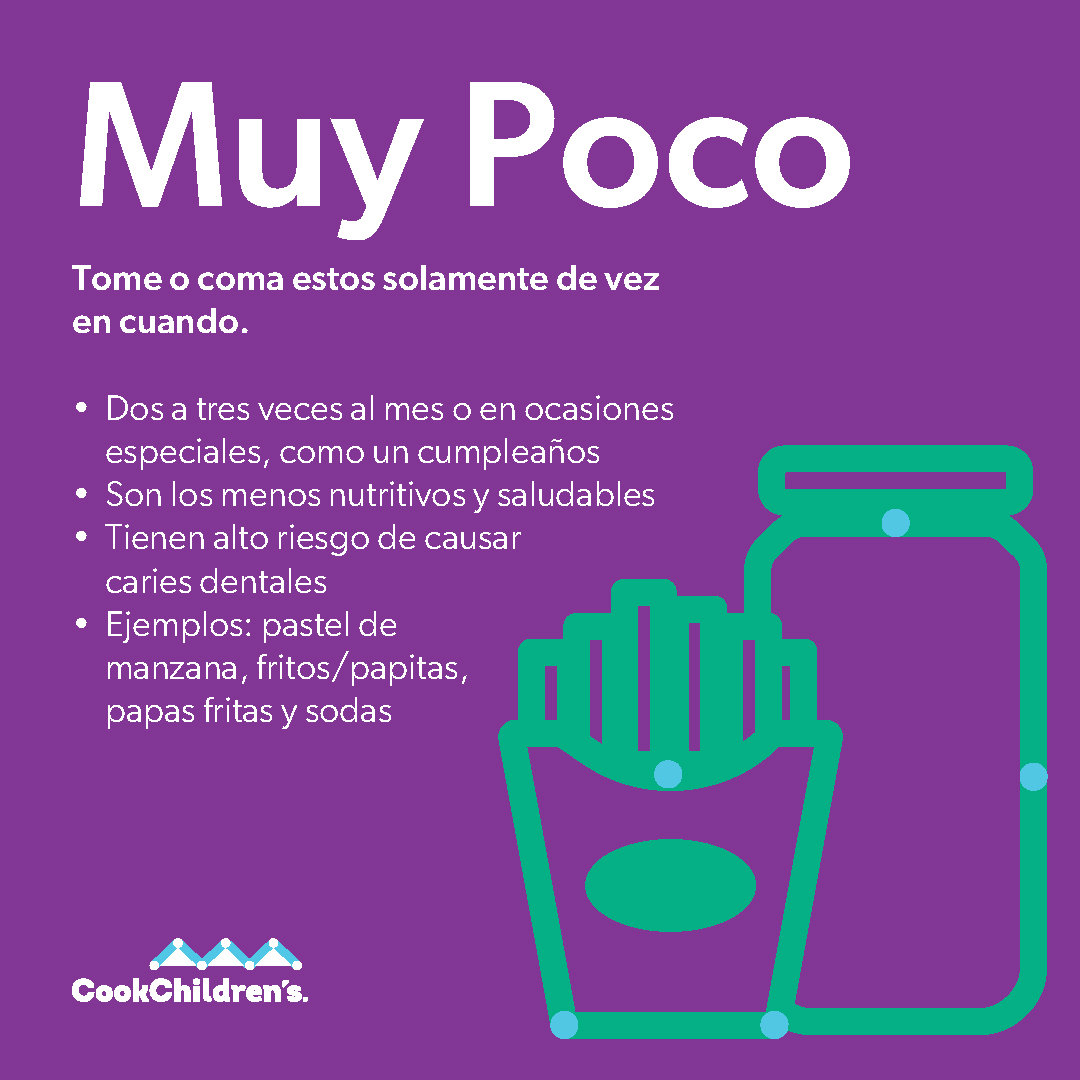
2 o 3 veces al mes
Muy Poco alimentos -alimentos que contienen más azúcar, sales, grasas no saludables y conservantes que los alimentos GO y SLOW. Una porción de un alimento WHOA se puede consumir 2 o 3 veces al mes. Algunos ejemplos de alimentos WHOA son: pastel de manzana, papas fritas y refrescos.
Contact us about our program
For questions or information on 5210+ Every Day, please contact emily.russell@cookchildrens.org .

Access free resources
The Center for Community Health is committed to providing free education and access to our data.